

Research Updates

Here at Bigger Better Brains we believe that through educating yourself, you can then educate and affect positive change in your community.
With all of the research in the field of neuromusical science, our BBB Research section serves as a content hub for you. We regularly share findings and break down the latest research to educate and inspire discussion. We hope you enjoy this page on our website and share BBB news with your colleagues, parents and students.

The surprising link between music and cognitive health in older adults
Can music play a role in healthy aging? According to new research, the answer might be yes.

Can Music Sync Our Heartbeats? This Study Says Yes!
Imagine sitting in a concert hall, completely immersed in the music, when something incredible happens—you and the people around you begin to breathe and feel the same rhythm.

Singing is not just singing, it is social glue
A new research project will investigate if singing together could be more than just a pleasant pastime; it might be a powerful tool for enhancing cooperation across various aspects of society, from classrooms to boardrooms.

‘If you’re aiming for this…’ Free Digital Download
Introducing our exciting new ‘If You’re Aiming for This…’ campaign, created to help you engage with your community like never before!

Pitch Perfect: Singing Earworms Reveals Surprising Trait
Many of us have experienced those catchy tunes that get stuck in our heads, but did you know that nearly 45% of people can sing these earworms in perfect pitch?
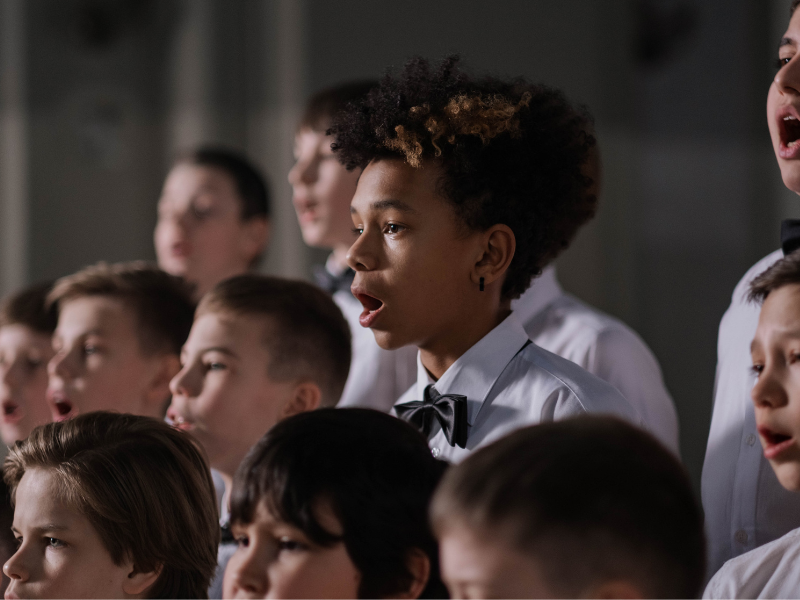
Singing Together: How choirs boost brain health and emotional well-being
Singing in a community choir is more than just a musical activity—it's a powerful therapeutic experience

Ebook: Music benefits every child!
There is a commonly held belief that learning music should only be for those students who are identified as talented or interested. Neuromusical research has shown that music learning can benefit all students in terms of cognitive development.

'Wanna Be Like...' Olympics Edition
We're thrilled to announce the launch of our Olympics 'Wanna Be Like...' campaign, created to celebrate the excitement of the 2024 Olympic Games!

Playing music when you're older could come with brain benefits
Imagine a world without music. There are no high school marching bands, no commercial jingles, and no need for Grammy Awards. It’s a rather dreary thought, yes?

Music Education vs. Brain Training Programs
Recent research has revealed that brain training programs for children do not lead to significant improvements in real-world cognitive functions.

Could 'musical medicine' influence healthy aging?
Imagine a world where music serves as a powerful tool for healthy aging. Dr. Psyche Loui at Northeastern University explores how music strengthens brain connections, enhancing memory and emotions.

A 90-minute habit that can boost your brain and mental health!
Dr. Seinfeld's research involving participants aged 60 to 85 found that those who took piano lessons showed remarkable improvements in executive functions, attention, and inhibitory control.


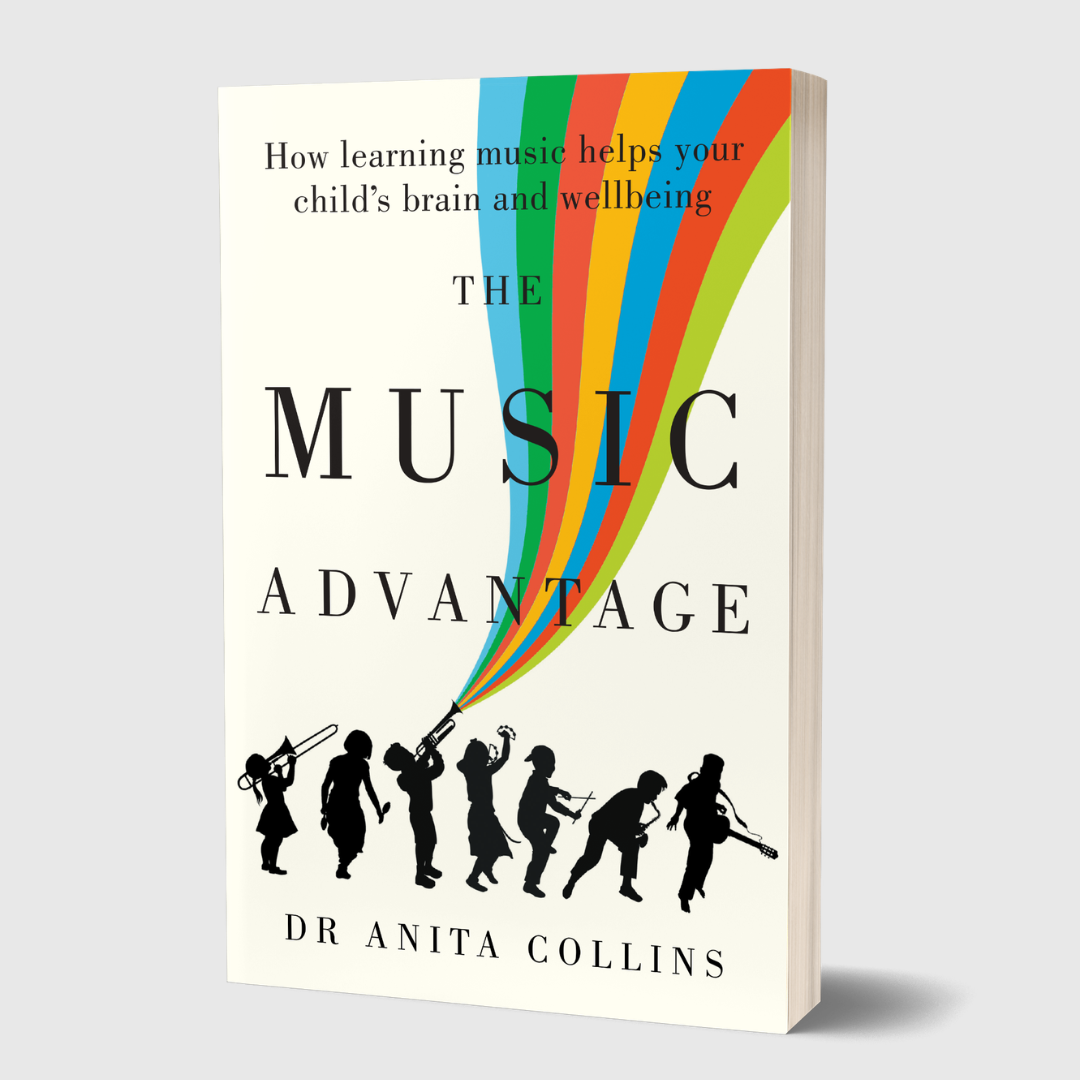

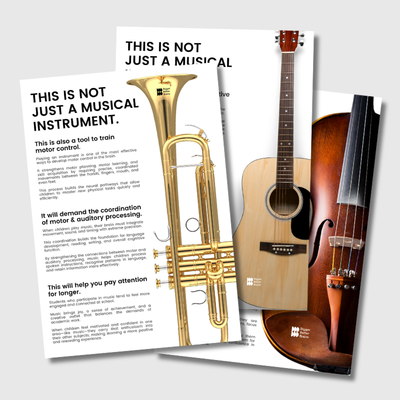
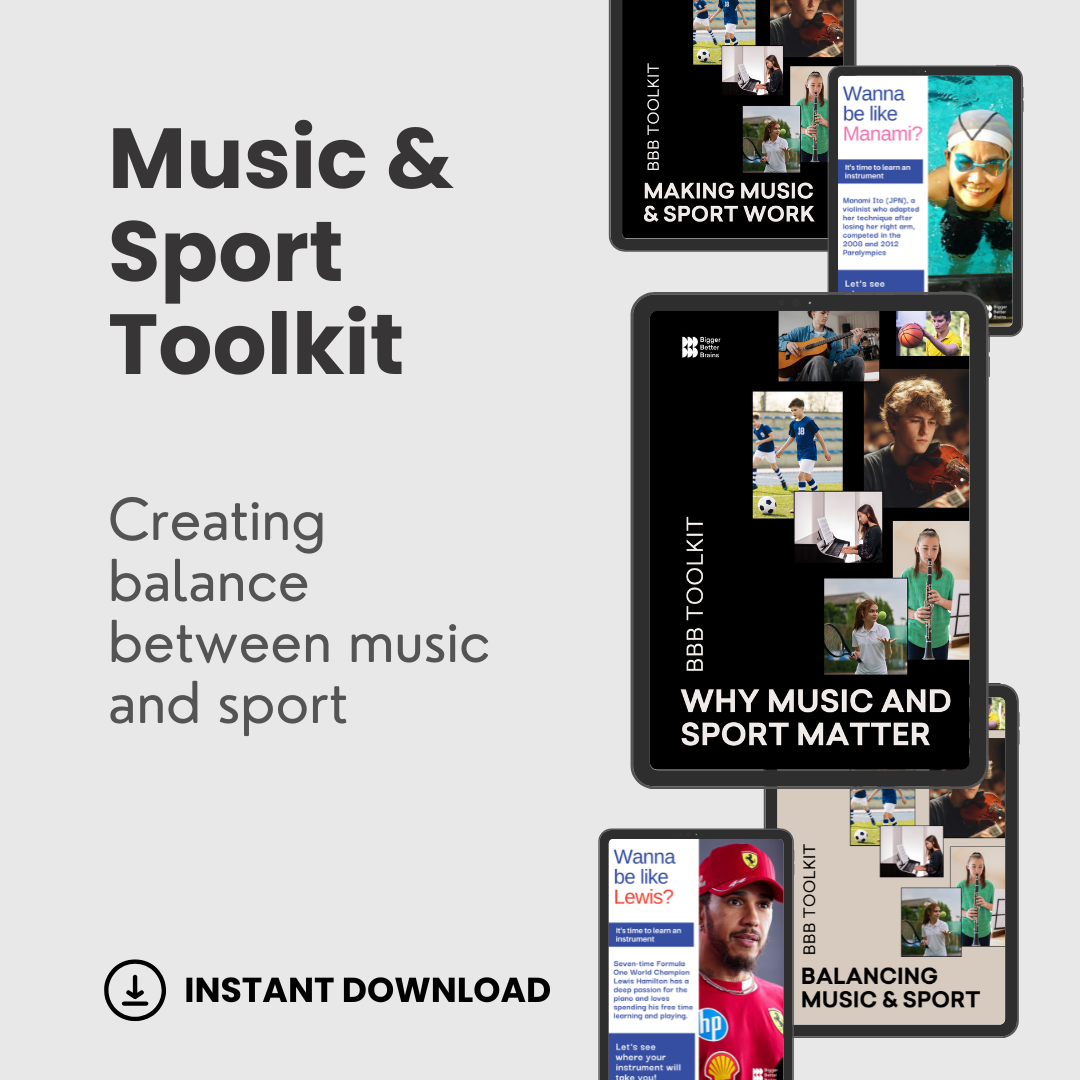

Give your music program a health check
A practical diagnostic book that helps you assess the health of your music program, identify strengths and warning signs, and decide what needs attention next. Music programs are living systems.
Participation shifts, students come and go, staffing and resources change, workloads grow and school priorities evolve. A program that felt healthy two years ago may look very different today.
The Music Program Health Check gives you a structured way to step back and examine how your program is really functioning. Using the familiar language of a medical check-up, you’ll identify symptoms, examine the vital signs of your program, separate evidence from assumptions and create a clear prescription for what comes next.
WHAT YOU GET
8-page Music Program Health Check – assess your program at a glance, identify symptoms and distinguish evidence from assumptions.
9-page Music Program Vitals Check – examine eight areas of program health: Participation, Retention, Capacity, Visibility, Advocacy, Community, Student Growth and Culture.
4-page Music Program Results Summary – bring your findings together, identify priorities and create your Prescription for what to continue, monitor, improve and celebrate.
3 Professional Learning Activities – extend your Health Check through guided reflection and practical activities designed to support your next steps.
WHAT IT HELPS YOU DO
See the overall health of your music program
Recognise strengths and uncover warning signs
Identify where pressure is building
Check whether your program is sustainable and supported
Move from assumptions to evidence
Decide what needs your attention now and what can wait
Turn your diagnosis into clear priorities for action
HOW TO USE IT
Set aside 30–60 minutes of uninterrupted time, just as you would for a health appointment. Start with your first impressions, symptoms and Health Snapshot. Then work through each area, comparing the Healthy Signs and Warning Signs and giving each a green, amber or red diagnosis.
Bring your findings together in your Program Health Report, then write your Prescription: what should continue, what needs monitoring, what is most important to improve and what deserves to be celebrated.
Finally, schedule your next Health Check for 3, 6 or 12 months so you can revisit your results and see what has changed.
WHY IT WORKS
No single measure can tell you whether a music program is healthy. Strong enrolments can exist alongside unsustainable workloads. Successful performances can mask retention problems. A busy program may still struggle to be seen, understood or valued by the wider school community.
The Music Program Health Check helps you look at the whole program. By examining multiple indicators together, you can see what is working, uncover where pressure is building and make more informed decisions about where to focus next.
“I knew where some of the pressure points were, but seeing the whole program laid out like this helped me connect the dots. It gave me a much clearer idea of what was working, what needed attention and where to focus next.”
Mary, Music Teacher.
COMMON QUESTIONS
What is the Music Program Health Check? A practical diagnostic book for assessing the strengths, pressures and overall health of your music program.
What does it assess? Participation, retention, capacity, visibility, advocacy, community, student growth and culture.
Do I need data before I start? No. It helps you identify what you already have evidence for and where you may be relying on assumptions.
How long does it take? Set aside approximately 30–60 minutes.
Is it only for struggling programs? No. It helps you identify what is working well as well as what may need attention.
What happens at the end? You create a Program Health Report and Prescription outlining what to continue, monitor, improve and celebrate.
How often should I use it? Revisit your Health Check in 3, 6 or 12 months depending on your results.
WANT MORE SUPPORT FOR YOUR MUSIC PROGRAM?
Your Music Program Health Check helps you identify where your program needs attention. BBB+ helps you decide what to do next.
BBB+ gives music educators access to 500+ evidence-based resources designed to strengthen advocacy, build understanding and support healthier, more sustainable music programs. Premium Toolkit members also receive a brand-new toolkit every month, giving you practical resources to tackle new challenges as they arise.
Join as a Premium Toolkit member for $60 a year, just $5 a month. That is less than the cost of two standalone toolkits for a whole year of support. Click Here
Want everything BBB+ offers? Premium Annual is 50% off right now. Click Here